

Introduction
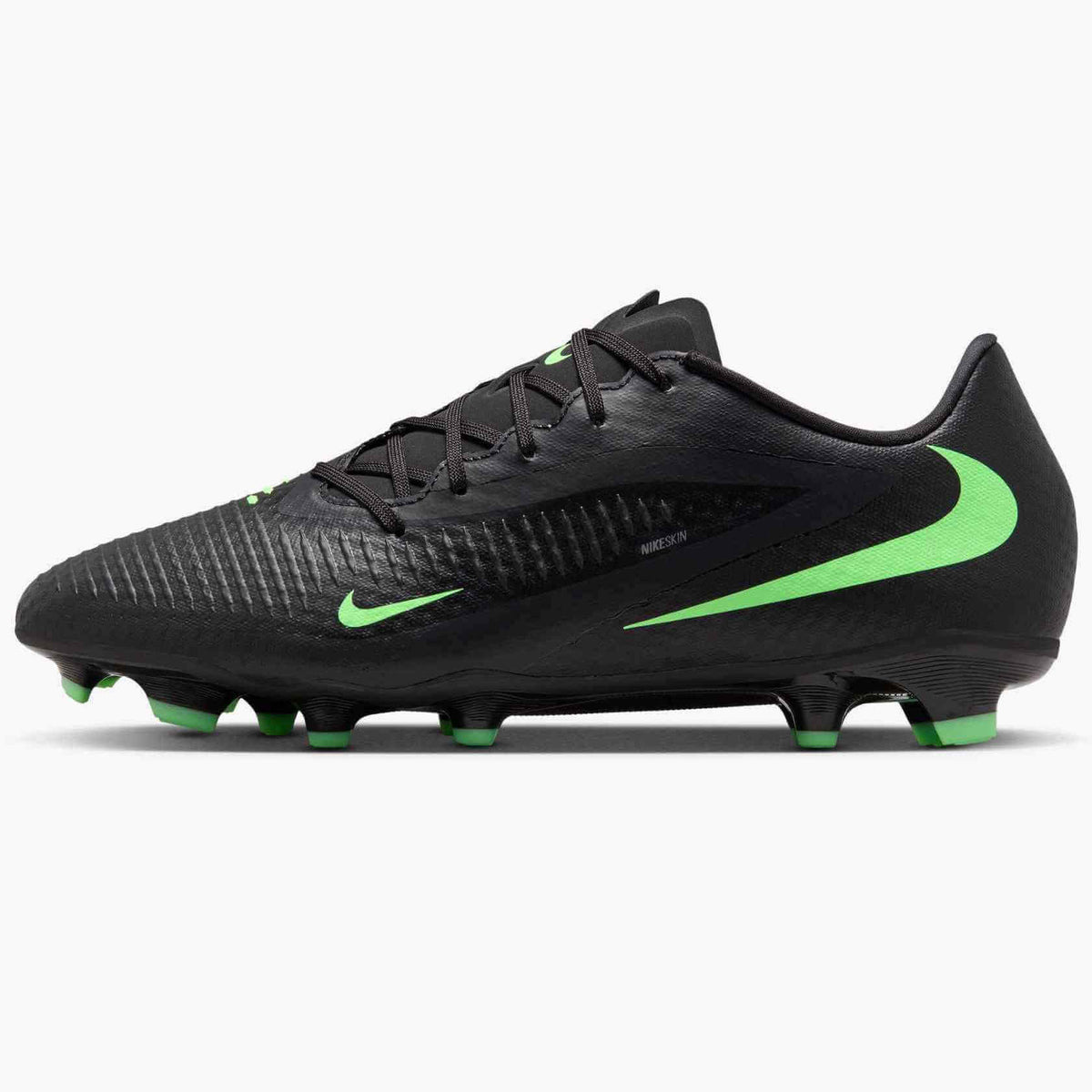
Yes. Soccer players usually wear cleats for outdoor games and practices because the studs on the sole are designed to provide traction on the field. The right type depends on where they play: natural grass, artificial grass, shorter turf and indoor courts can call for different footwear.
Cleats are common, but they are not the only shoes used for soccer. Indoor soccer and futsal players often wear flat-soled court shoes instead. Before buying a pair, check the playing surface, the manufacturer’s intended use and any rules set by the league or facility.
Why soccer players wear cleats
Traction helps players move on the field
Soccer involves more than running straight ahead. Players start, slow down, turn, plant a foot to pass and adjust their steps as the ball moves. A cleat’s outsole, the bottom of the shoe, has studs shaped and arranged to interact with a particular kind of playing surface.
That traction is useful when a player plants one foot and strikes the ball with the other. It also matters when changing direction to receive a pass or follow an opponent. Cleats do not guarantee that a player will never slip, though. The field’s condition and the suitability of the outsole still matter.
The word “cleats” can refer to the whole shoe or to the studs underneath it. You may also hear soccer cleats called “boots,” especially by people who use British soccer terminology.
Soccer shoes differ from everyday sneakers
A running shoe or casual sneaker can be fine for kicking a ball around in some settings, but its sole may not provide the same traction as footwear designed for the field. On grass, for example, a smooth athletic sole does not interact with the ground in the same way as studs.
Soccer footwear is also made with frequent ball contact in mind. The upper, which covers the top and sides of the foot, is shaped for a soccer player’s movements and contact with the ball. That does not mean a particular shoe will automatically improve your touch. Fit and practice remain important.
For a first session, you do not necessarily need to buy the most expensive pair. Start by finding out what the organizer permits and what surface you will use. Then choose footwear that fits comfortably and is intended for that setting. Pro Soccer’s soccer cleat buying guide covers surface and fit choices in more detail.


Which soccer shoes match each surface?
The surface is the most useful starting point because soccer outsoles are not interchangeable. Under Armour’s footwear guide names several of the common categories below. Always check the manufacturer’s instructions for the exact pair as well as the facility’s rules.
| Footwear type | Common abbreviation | Usual intended setting | What to check |
|---|---|---|---|
| Firm ground | FG | Natural grass | Whether the exact cleat is intended for your field conditions |
| Soft ground | SG | Softer natural grass | Whether the venue and competition permit the studs |
| Artificial ground | AG | Suitable synthetic playing fields | Whether the model is intended for the particular field |
| Turf | TF | Shorter or harder artificial surfaces | Whether the facility permits that sole and its small lugs |
| Indoor or court | IN or IC | Appropriate hard indoor courts | Whether the court requires a non-marking sole |
| Multi-ground | MG | Surfaces specified for the model | Which surfaces the manufacturer actually lists |
Natural grass: firm ground and soft ground
Firm-ground cleats are a common choice for natural grass. They typically have molded studs designed for that type of field. If your practices and games are on natural grass, FG is a useful category to consider first, provided the exact model suits the conditions.
Soft-ground cleats are designed for softer natural grass. Some have removable or metal-tipped studs, but the construction varies by model. Do not assume a soft-ground cleat is allowed everywhere: a league or venue may restrict particular studs, and the manufacturer’s intended surface matters too.
If you play on different grass fields, ask about the conditions you will encounter most often. The answer may help you choose between the shoes you are considering without relying on a label alone.
Artificial grass and shorter turf are different
“Artificial turf” is a broad description. A synthetic field with a grass-like playing surface is not necessarily the same as a shorter, harder turf area. That distinction matters when comparing artificial-ground cleats and turf shoes.
AG cleats are designed for suitable synthetic playing fields. Turf shoes generally have many small rubber lugs rather than the more prominent studs associated with field cleats. Neither label means a shoe is right for every artificial surface.
Do not assume that firm-ground cleats are suitable for artificial grass just because both surfaces look like fields. Likewise, “multi-ground” does not mean a pair is approved for every venue. Check the exact shoe’s intended use and ask the facility if you are unsure what its surface is called.
Before buying, ask for the name or type of the playing surface. A field’s appearance alone may not tell you which outsole the manufacturer recommends.
Indoor courts need a different sole
For soccer or futsal on an appropriate hard indoor court, players commonly wear indoor shoes with flat soles rather than outdoor studded cleats. Some courts require non-marking soles, so check the facility’s rules for indoor shoes.
Not every indoor soccer facility has a hard court. Some have artificial turf, which may call for a different shoe. “Indoor” describes the location, not necessarily the surface beneath your feet.
What if you play on more than one surface?
First, list the places where you expect to play and how often you will use each one. Then compare those surfaces with the intended uses listed for the exact footwear you are considering.
A pair labeled MG may cover the surfaces you need, but the abbreviation alone does not establish that. If no single pair is intended and permitted for all your regular surfaces, separate shoes may be the more practical choice. You can prioritize the surface you use most while planning for the other setting.
Are cleats required for soccer?
League and facility rules can differ
Cleats are common in organized outdoor soccer, but you should not assume every game has the same footwear requirement. An indoor league may require court shoes, while a field or competition may restrict certain types of studs.
Before a first practice or match, ask the coach, league or facility:
- What surface will the team use for practices and games?
- Are soccer cleats required, or is another type of athletic shoe permitted?
- Are there restrictions on metal, removable or other studs?
- Does the venue have its own footwear rules?
These questions are especially useful if practices and games happen at different locations. A pair that works for one session may not be intended or permitted for another.
Can a beginner play in regular athletic shoes?
For a casual kickaround, ordinary athletic shoes may be a reasonable option if they suit the surface and the setting permits them. The same is not automatically true for an organized practice or match. Ask before arriving, particularly if the activity is on grass or the field has specific footwear rules.
If you use shoes you already own, check that they fit securely and that their soles are in good condition. Pay attention to how the surface feels underfoot. If you are struggling to get traction, or the organizer requires soccer-specific footwear, choose a suitable pair rather than treating sneakers as a universal substitute.
Are soccer cleats the same as football or baseball cleats?
They are different types of sports footwear. As Under Armour explains in its comparison, many American football cleats have a stud at the front of the sole, while soccer cleats generally do not. Baseball cleats can also have a front toe spike and are designed for different surfaces and movements.
A shoe made for another sport is not automatically suitable for soccer just because it has studs. Its sole must suit the field and comply with the applicable rules. If you already own a pair and hope to use it, show the exact shoe to the league or organizer before relying on it for a game.
Can soccer players wear metal studs?
Some soccer cleats have metal or metal-tipped studs, particularly models intended for soft natural ground. That does not mean a metal-studded pair is allowed in every competition or at every field.
Check the specific league and facility rules, then confirm that the shoe is intended for the surface. Inspect the studs before playing as well. Damaged or sharp components are a reason to stop and get the footwear checked rather than assume it is acceptable.
How should soccer cleats fit?
Check length, width and heel hold
A suitable cleat should feel secure without causing pain, numbness or compression. You want enough room for your toes, a width that accommodates your foot and a heel that stays reasonably secure as you move.
Use the manufacturer’s size chart for the relevant footwear category. Charts can distinguish among men’s, women’s and youth sizing, and the number in one system should not be treated as a universal conversion to another. Measure both feet and compare the measurements with the chart rather than assuming your everyday shoe size will fit every cleat. Pro Soccer’s size guide includes charts for different brands and footwear categories.
Try on both shoes with the socks you expect to play in and any permitted inserts you normally use. Stand, walk and make a few gentle movements in an appropriate clean area. The goal is to notice pressure, slipping or pinching before deciding whether the pair fits.
Snug does not mean painful
Soccer cleats are often described as snug, but that does not mean you should buy a pair that hurts and hope it stretches. If your toes feel compressed, the sides squeeze your foot or your heel rubs when you walk, try another size or shape.
Laces can help adjust how a shoe feels across the foot, but they cannot fix every fit problem. A model that is too narrow, too long or poorly shaped for your heel may still feel wrong after you tighten it. Equally, tying laces very tightly should not be necessary to compensate for a shoe that is much too large.
If you are ordering online, check the seller’s current return terms before wearing the cleats outdoors. Trying them in a clean indoor area may help you assess the fit while respecting the applicable policy.
Youth players need a good fit now
For a child, it can be tempting to buy a much larger size to leave room for growth. Excess length, however, can make it harder to keep the foot secure inside the shoe. Look for a fit that is comfortable now, with appropriate toe space, rather than relying on an oversized pair.
Ask the player how the shoes feel and watch for signs that the heel is slipping or the foot is crowded. Since feet change, check the fit again when the player mentions discomfort or the shoes begin to feel different. The right youth shoe is the one that fits the player and suits the field, not simply the one that resembles a professional’s cleats.
Choosing and looking after a pair
Start with a practical budget
A higher-priced cleat is not automatically the right choice for every player. Once you know the surface and any footwear rules, compare soccer cleats that fit your foot and budget. A lower-priced model that feels comfortable and is intended for your field can be a sensible choice.
Consider how you plan to use the shoes. Someone playing occasional recreational games may have different preferences from a player training several times a week, but both need a suitable outsole and fit. Color and appearance can be part of the decision after those essentials are covered.
You do not need to select a cleat solely because a professional player wears a similar-looking model. Their preference does not establish that the same shoe will fit your foot, suit your surface or reproduce their performance.
Inspect your cleats before and after play
A quick condition check can help you notice a problem before the next session. Look at the whole shoe, not just the upper:
- Check the studs or lugs for damage, unusual wear or loose removable parts.
- Look for separation where the upper meets the sole.
- Check laces and closures so the shoe can be secured properly.
- Notice whether the inside still feels comfortable and whether your heel stays in place.
After play, remove loose dirt and grass gently. Let the shoes air out, and use the manufacturer’s care instructions for cleaning the specific materials. Avoid assuming that soaking, machine washing, strong cleaners or direct heat are suitable for every pair.
Replace a pair when it no longer works for you
Players do not need a new pair for every game. A pair that still fits, is in good condition and suits the field can continue to be useful.
Consider a replacement if the shoes no longer fit, the sole or upper is damaged, or the studs are worn enough that the shoe is no longer functioning as intended. If the issue is persistent discomfort, first consider whether the size or shape is wrong. A new version of the same poorly fitting shoe may not solve it.
For your next game, start by confirming the surface and footwear rules. Then choose a pair that is intended for that surface and feels comfortable with your playing socks.
Frequently asked questions
Do soccer players always wear cleats?
No. Players commonly wear studded soccer cleats outdoors, but footwear depends on the surface and the rules. On a hard indoor court, players often use flat-soled indoor soccer shoes instead.
Do I need cleats for my first soccer practice?
Ask the coach or organizer before practice. Some sessions may permit suitable athletic shoes, while others require soccer-specific footwear. The surface and facility rules are important to that decision.
Can I wear firm-ground cleats on artificial grass?
Do not assume that every firm-ground cleat is suitable for artificial grass. Check the manufacturer’s intended use for the exact pair and the field’s rules. An artificial-ground or other permitted shoe may be more appropriate for the particular surface.
Do goalkeepers wear soccer cleats?
Goalkeepers often wear soccer cleats when playing outdoors, just as field players do. Their footwear should suit the surface, fit comfortably and comply with the competition and venue rules. On an indoor court, an appropriate indoor shoe may be the better choice.