

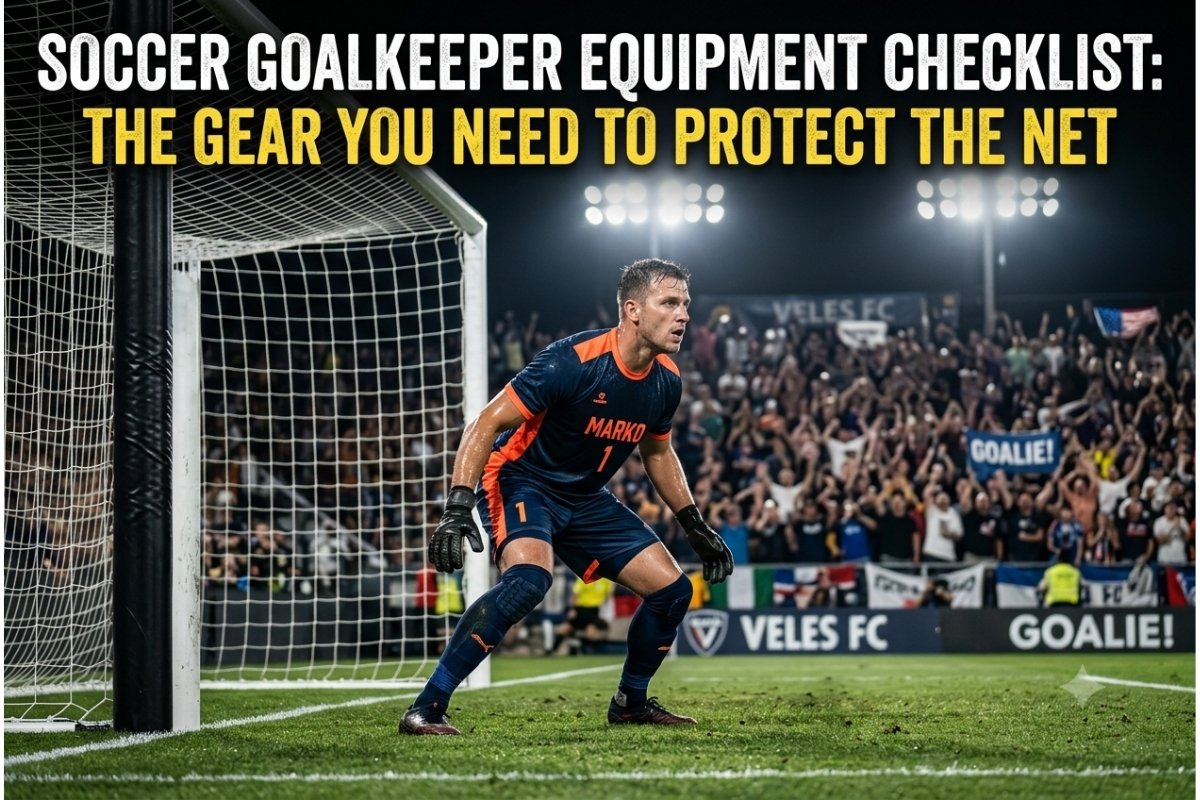
Soccer players can enter the field with nothing much except their boots and simple shin pads, but a soccer goalkeeper needs a very advanced soccer equipment kit.
Goalkeepers are the last line of defense, so their task is always dangerous as it involves many sudden, powerful lateral movements, hard impacts, and aerial pursuits. It calls for a kit that will not only be able to protect you but will also make you play better at the same time. Read on to discover what that is.
What soccer gear does a goalkeeper need?
- Gloves: Premium latex palms to absorb high-velocity impacts and provide secure ball handling.
- Padded clothing: Apparel with built-in foam for cushioning during landings and dives.
- Shin guards: Mandatory equipment that protects the shin bone from direct stud strikes.
- Soccer cleats: Cleats optimized for rapid lateral pushes,
- Non-slip grip socks: Socks that eliminate internal foot slippage.
Goalkeeper Hand Protection: Gloves & Fingersaves
Hands are your main tools during the game. Gloves with strong protection are non-negotiable. You need something that shields your hands from breaks and sprains, but still gives you enough control to grab crosses and throw or kick the ball out when you’ve got possession.
What's Behind the Goalkeeper Glove Cuts?
 The design of the goalkeeper glove affects how well you can control the ball during play:
- Negative Cut: It has an inside lining with stitching and provides a very tight fit. The inside part doesn't move at all, and that's why this cut is so popular among professional goalies, as they value ball control the most.
- Flat Palm: An old-school cut with external stitching providing a loose fit with a perfectly flat surface area.
- Roll Finger: Latex wraps entirely around each individual finger, providing maximum latex-to-ball surface area and excellent built-in cushioning for parrying heavy drives.
- Hybrid Cut: Combining multiple styles, such as roll fingers on the outer digits and negative cuts on the middle fingers, to deliver a tailored balance of tight fit and maximized catching space.
What Is The Best Palm Latex For Soccer Gloves?
The type of palm latex you choose will determine how well you handle the ball. Match-grade latexes such as premium German latex offer outstanding tackiness and shock absorption to avoid any spills, but are not long-lasting on tough surfaces. Synthetic training latex is tougher and more economical but does not have as much tackiness.
Goalkeeper Glove Size Chart & How to Measure
- Use a fabric measuring tape that is flexible.
- Measure the entire circumference of the widest part of your palm (just below your knuckles, not including the thumb).
- Round to the nearest whole inch.
- To find your correct goalkeeping glove size, add exactly 1 inch to that measurement.
| Hand Circumference (Inches) | Calculated Glove Size | Sizing Category |
| 4.5" - 5.0" |
Size 4 / 5 |
Junior (Youth) |
| 5.5" - 6.0" |
Size 6 |
Junior (Youth) |
| 6.5" - 7.0" |
Size 7 |
Senior / Adult Retail (Small) |
| 7.5" - 8.0" |
Size 8 / 9 |
Senior / Adult Retail (Medium) |
| 8.5" - 9.0" |
Size 10 / 11 |
Senior / Adult Retail (Large) |
| 9.5"+ |
Size 12 |
Senior / Adult Retail (X-Large) |
Critical Sizing Note: Don’t let them fit right up against your fingertips. Leave about a quarter to half an inch of space at the top of each finger. That little gap keeps your fingers from ripping through the seams during fast shots and helps your gloves last a lot longer.
Click here to browse through our selection of premium brand Goalkeeper Gloves.
Goalkeeper Apparel & Impact Protection
Diving repeatedly onto unforgiving ground or dry artificial grass takes a severe physical toll on a goalkeeper's body. That's why goalkeepers wear specialized apparel and padded gear to protect against painful turf burns, deep bruising, and repetitive impact trauma.
- Padded jerseys: Long-sleeve jerseys with integrated ergonomic EVA foam padding at the elbows. During a match, they absorb the brunt of the force when landing from an aerial claim or cross-body save.
- Padded shorts: A pair of heavy-duty goalkeeper shorts or pants that are filled with targeted foam layers over the vulnerable hip bones and thighs. The protective layers shield keepers against impact and bruising when dropping sideways to defend low shots.
- Anti-abrasion compression base layers: Ultra-tight, moisture-wicking shirts and sliders goalkeepers wear underneath regular kits. These layers have thin, flexible polyurethane coatings that will stop turf burn when sliding across dry synthetic grass.
Stay protected and on top of your game! Buy goalkeeper protective equipment from ProSoccer's Store.
Shin Guards: Essential Lower-Leg Protection
FIFA Law 4 states that shin guards are a mandatory safety requirement to prevent serious injury to the very exposed tibia bone. They also provide a necessary defensive buffer from direct stud impact in the heat of match play. Think throwing yourself down to smother a breakaway at an attacker 's running feet.
For best results, choose guards with secure compression sleeves that won’t move during dynamic diving saves.
Click here to browse through ProSoccer's shin guard collection.
Footwear and Traction
Goalkeepers have unique foot movement dynamics, relying on explosive lateral lunges, rapid side-shuffling, and maximal vertical jumps from a stationary stance. High-performance footwear ensures you don't lose precious fractions of a second slipping when exploding toward the top corner.
Cleats Engineered for Agility
Goalkeepers prioritize footwear delivering exceptional lateral stability and solid midfoot lockdown to prevent injury during explosive push-offs. Lines like the adidas Predator and Nike Tiempo are highly favored for combining robust soleplates with micro-textured upper grip zones for powerful clearances.
Make sure to always match stud patterns to your surface, like Firm Ground (FG) for grass or Turf (TF) for synthetic fields, to safeguard your joints.
High-Performance Goalkeeper Socks 
Standard socks allow your feet to slide, causing blisters and delayed reaction times. Professional keepers counter this with technical grip socks featuring interior and exterior non-slip silicone pads. These pads lock the foot securely inside the boot, maximizing energy transfer during sharp lateral cuts while providing targeted cushioning to absorb heavy landing forces.
Browse through our selection of grip socks that offer great traction and non-slip paddings.
What Does FIFA Law 4 Ask for Goalkeepers?
Under IFAB/FIFA Law 4, matching match-day requirements dictates the following strict rules:
- Five compulsory items: A sleeved jersey, socks, footwear, shorts (or uniquely permitted long tracksuit bottoms), and mandatory shin guards completely covered by socks.
- Color differentiation: The goalkeeper's jersey color must distinctly conflict with both teams and match officials.
- Total jewelry ban: All jewelry items are strictly forbidden and must be entirely removed before play.
- No taping: Covering earrings, bands, or wedding rings with athletic tape is completely prohibited.
Download the Goalkeeper Checklist on what is and is not allowed.
FAQs About Soccer Gear
How long do goalkeeper gloves typically last?
A good pair of match gloves usually keeps its best grip for about 12 to 14 games before you start seeing wear on the palm. If you rotate your gloves for practice and match use, and keep them clean, you can make them last through an entire season.
How do I clean and care for my goalkeeper gloves?
When it comes to cleaning, rinse your gloves with lukewarm water right after each use to get rid of dirt and sweat. Press out the water gently but don’t wring or twist them, or you’ll mess up the seams. Let them air-dry at room temperature, far from direct sunlight or heaters, since heat dries out and cracks the latex.
What is the difference between wet-weather and all-weather latex?
There’s a real difference between wet-weather and all-weather latex. Wet-weather latex uses a super-porous material that gets really sticky when it’s soaked. All-weather latex works in most conditions, but it needs to stay a bit damp for the best grip, especially if it’s hot and dry outside.
Do Goalkeepers Need Fingersaves?
Internal plastic 'fingersaves' run along the back of the glove to brace against hyperextension when saving fast shots. They are not a must, but they can help prevent injuries. Most advanced players steer clear of them to maintain natural finger dexterity and flexibility in ball handling.


