

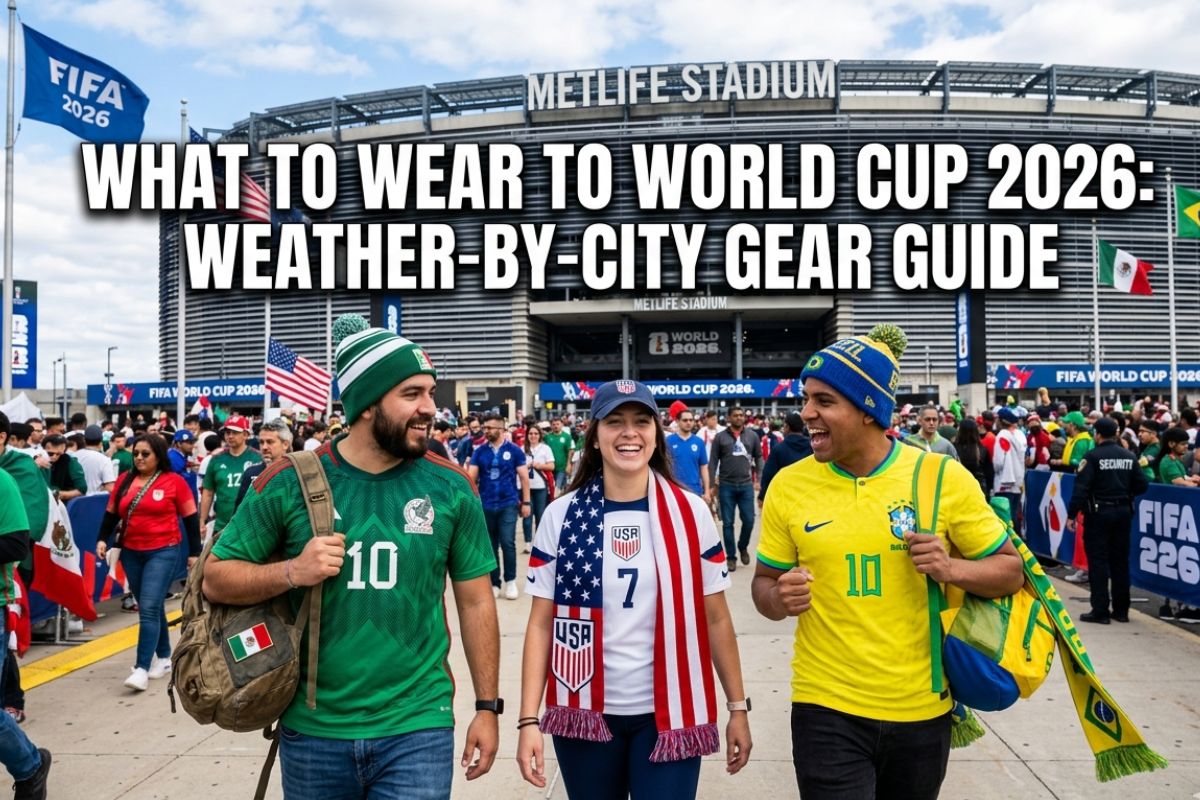
From the cool Vancouver mornings to the tropical humidity of Monterrey, the FIFA World Cup 2026 is set to be the most geographically diverse sporting event in history. If you've booked your tickets and your flight but are still unsure what to wear, ProSoccer has you back. This guide breaks down exactly what you need to pack to handle North American summer climates, stadium security protocols, and the physical demands of match day.
The 2026 Match-Day Packing List (TL;DR)
Follow the "3-Layer Rule":
- Base: A high-performance moisture-wicking shirt to manage sweat in humid host cities.
- Identity: A lightweight fan jersey for stadium entry and team pride.
- Utility: A packable rain-resistant hoodie for evening temperature drops and coastal breezes.

Understanding the FIFA 2026 Climate Zones
For this World Cup, you can't just stuff your bag with the same clothes and call it good. With matches spread out over such a huge area, what works in Toronto will leave you drenched in Miami. To keep things simple, we've split the 16 host cities into four main weather zones so you can pack smart.
1. Tropical & High-Humidity Zone
Cities: Miami, Houston, Monterrey, Atlanta, Dallas
Games in these spots are going to feel swampy—hot, humid, and unforgiving. In places like Houston and Miami, the heavy, damp air means your go-to cotton tee will cling and turn soggy fast.

The Gear: Go for ultra-breathable soccer gear. Look for soccer jerseys with tech like “Heat.RDY” or “ADV”—they’re made to help you stay cool in serious heat.
The Strategy: Start with a thin synthetic base layer—even if it seems odd, putting a technical layer under your jersey actually keeps you drier. It pulls sweat off your skin, so you don’t get that gross, sticky feeling halfway through the match.
2. The High-Altitude & Sun-Intense Zone
Cities: Mexico City, Guadalajara, Denver
In Mexico City and Denver, the air is thinner and the UV index is significantly higher. You will burn faster and dehydrate quicker.

- The Gear: A sun protection soccer hat is non-negotiable. Additionally, consider lightweight, sun hoodies or long-sleeve jerseys with a higher knit density to block UV rays.
- The Strategy: Temperatures in high-altitude cities drop rapidly once the sun goes down. If you are attending a 7:00 PM kickoff at the Estadio Azteca, you might start the match in a jersey and end it needing a quarter-zip.
3. The Variable Coastal Zone
Cities: Seattle, Vancouver, San Francisco (Santa Clara), Los Angeles, Boston
These cities are prone to the "Marine Layer"—a thick fog or mist that can roll in quickly, dropping temperatures by 10-15 degrees in an hour.
- The Gear: Soccer rain gear that is highly packable. You want a shell that can withstand a Pacific Northwest drizzle but fits into a small bag.
- The Strategy: Focus on footwear. Coastal cities often involve more walking through damp streets. Opt for synthetic leather cleats-inspired sneakers that offer some water resistance.
4. The Continental Extremes
Cities: New York/New Jersey, Philadelphia, Kansas City, Toronto
These cities experience "Heat Island" effects. Stadiums like MetLife or Lincoln Financial Field can feel like ovens during the day but become wind tunnels at night.
- The Gear: Stadium cold night layers like mid-weight hoodies or windbreakers.
- The Strategy: Versatility is key. These are the cities where the "3-Layer Rule" is most effective.
Stadium Logistics: What No One Tells You About Match Day
Your outfit has to do more than look good; it has to pass security. FIFA 2026 stadiums will have strict "Clear Bag Policies."
The "Packability" Factor
Because you likely won't be allowed to bring a large backpack, your extra layers must be "wearable" or "stowable."
- The Quarter-Zip: This is the MVP of soccer match backpacks. It can be tied diagonally across the chest (the "streetwear style") or around the waist without being bulky.
- Rain Ponchos vs. Shells: While a plastic poncho is cheap, a technical soccer rain shell provides breathability. In a crowded stadium, a plastic poncho creates a "sauna effect" that will leave you soaked from the inside out.
Footwear: The 20,000 Step Rule
Between transit hubs, fan fests, and navigating massive stadium complexes like SoFi Stadium in LA, you will easily clock 20,000 steps on match day.
- Avoid: Brand new shoes.
- Choose: Supportive sneakers with mesh uppers for airflow. If you are wearing soccer-specific "lifestyle" shoes (like Sambas or Gazelles), ensure you have high-quality cushioned socks to prevent blisters in the summer heat.
The World Cup 2026 Outfit Formula

If you want to simplify your packing, follow these three proven formulas:
The "Daytime Heat" Kit
- Head: Lightweight ventilated cap.
- Torso: Official team jersey + moisture-wicking base tee.
- Bottom: 7-inch athletic shorts with zipper pockets (to secure your phone).
- Feet: Crew-length moisture-wicking socks + breathable runners.
The "Rainy Match" Kit
- Head: Brimmed hat (to keep water off sunglasses).
- Torso: Jersey + packable 2.5L waterproof shell.
- Bottom: Quick-dry hybrid shorts or joggers.
- Feet: Water-resistant sneakers + spare socks in a clear plastic bag.
The "Late Kickoff" Kit
- Torso: Jersey + technical quarter-zip or light hoodie.
- Bottom: Lightweight tech-fleece pants or joggers.
- Accessories: A team scarf (perfect for extra neck warmth and showing your colors).
World Cup 2026 Gear FAQ
Can I wear my club jersey to a World Cup match?
Absolutely! While most fans wear national team colors, the World Cup is a celebration of soccer culture. Just ensure the fabric is suited for the local weather.
Are there dress codes for the VIP or Hospitality sections?
Generally, "smart casual" is the rule. A polo-style soccer shirt or a high-end quarter-zip is the perfect middle ground between fan gear and formal attire.
What is the best way to carry my gear?
Use a stadium-approved clear bag. Pro Tip: Roll your rain shell or hoodie tightly and secure it with a rubber band to save space for souvenirs.


