

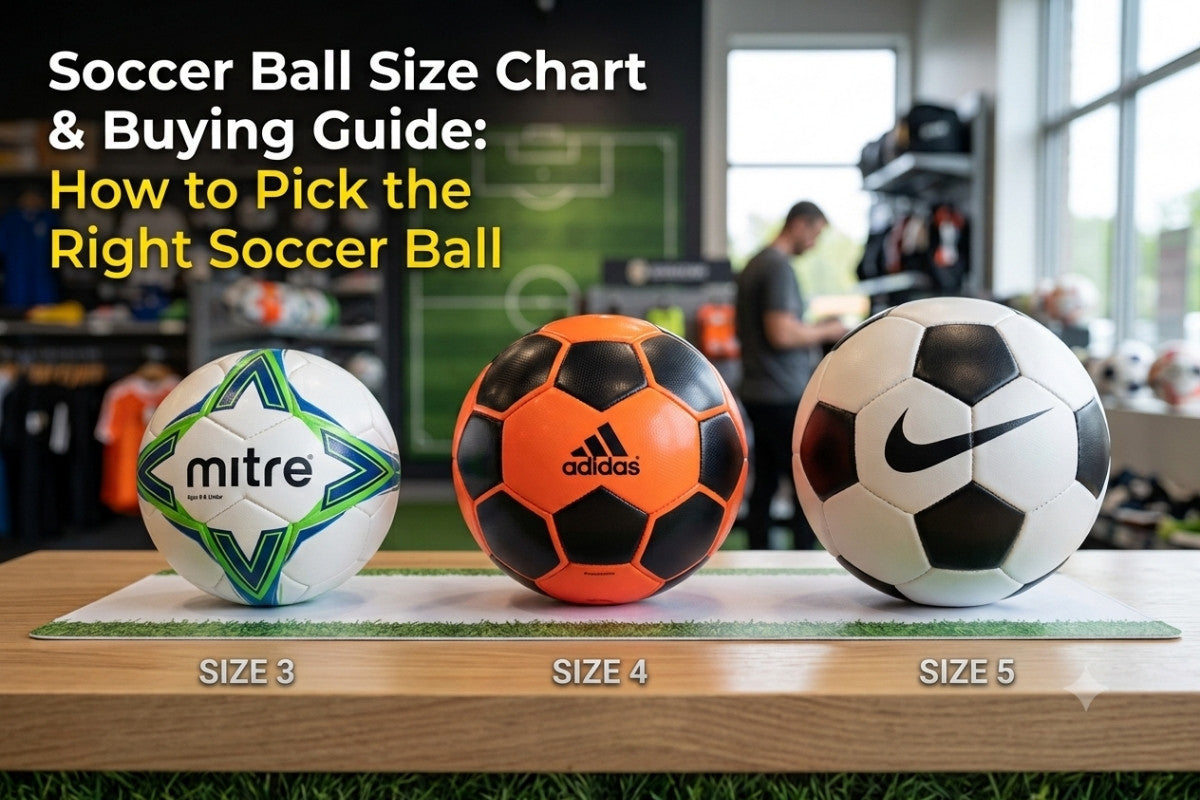
Walk into any sporting goods store and there are dozens of soccer balls that look pretty much the same. It makes you wonder if the higher price tag is worth paying for. However, soccer ball size charts tell a different story: a ball that matches your playing level, field, and style speeds your development.
Soccer Ball Size Chart: What Size Do You Need?
Soccer ball size is determined by age, and it's the single most important factor in choosing a ball. Use the soccer ball size chart below to match your player's age to the correct size. A ball that's too big or heavy can strain a young player's legs and slow their technical development, while a ball that's too small won't prepare older players for regulation play.

Size 3 Soccer Balls (Ages 8 and Under)
Size 3 balls are lighter and smaller, for young players still developing coordination and first touch skills. They are the norm for U6-U8 leagues.
Size 4 Soccer Balls (Ages 9–12)
Size 4 is the step between beginner and pro because of its smaller size compared to a competitive ball size but still heavy enough to build the player's strength. It's mostly used in U9 to U12 youth leagues.
Size 5 Soccer Balls (Ages 13+)
The official match ball size for high school, college, and professional play is Size 5. If your player is 13 or older, or already playing at a competitive club level, this is the ball they will train and play with.
Soccer Ball Size Chart
| Age Group | Ball Size | Circumference |
| Under 8 | Size 3 | 23–24 inches |
| 9–12 | Size 4 | 25–26 inches |
| 13+ | Size 5 | 27–28 inches |
Tip: Bookmark this soccer ball size chart for the start of every season—kids can size up quickly!
Not sure which size fits your player right now? Check out our Youth Soccer Balls collection, sorted by age and size.
Match Ball vs. Training Ball: What's the Difference?
Not every soccer ball is built for the same job, and understanding the difference can save you money and improve practice quality.
Match Balls
Match balls are built for performance and consistency. They use higher-grade panels (often thermally bonded rather than stitched) for a truer flight path and softer touch — exactly what referees expect for official games.
Training Balls
Training balls are built for durability, not competition-grade touch. They hold up to daily use on turf, concrete, or grass and are typically more affordable, making them ideal for practice, drills, and backyard use.
Rule of thumb: keep a match ball for game day and a separate training ball for everyday practice. It protects your match ball's shape and pressure while saving you from replacing an expensive ball every few months.
Explore our match balls and training balls side by side to build a set that fits your team's budget.
Soccer Ball Materials: PU vs. TPU vs. PVC
The outer material of a soccer ball affects touch, water resistance, and price.
Polyurethane (PU)

PU is the most common material in mid-to-premium balls. It offers a soft, responsive touch similar to leather, along with good durability and water resistance — a strong balance for most players.
Thermoplastic Polyurethane (TPU)
TPU is used in premium match balls. It's more durable and weather-resistant than PU, and it's the material found in most professional and international match balls.
PVC
PVC is the most budget-friendly option. It's stiffer and less responsive than PU or TPU, but it's a solid, low-cost choice for casual play, younger kids, or backup balls.
Indoor vs. Outdoor Soccer Balls
If your player splits time between turf, grass, and indoor courts, ball choice matters more than you'd think.
Outdoor Soccer Balls
Outdoor balls are built with weather-resistant panels for grass and turf fields, where they'll face more moisture, dirt, and abrasion.
Browse our full soccer ball collection to see every size and style in stock.
Indoor and Futsal Balls
Indoor and futsal have a completely different setup than outdoor soccer, so naturally, they use a different ball. The balls use a low-bounce, felt-covered or smoother construction designed for hard court surfaces. Using an outdoor ball in indoor courts will cause the ball to bounce unpredictably and damage its surface.
Need both? Our Indoor Soccer balls & Futsal balls collections have low-bounce options built specifically for court play.
How to Check Soccer Ball Quality
Once you've used the soccer ball size chart to find the right size, a few quick quality checks before you buy (or before a season starts) can save you a wasted purchase:
- Panel construction: Thermally bonded panels last longer and perform more consistently than stitched panels.
- Bladder type: Butyl bladders hold air longer; latex bladders offer a softer touch but need more frequent inflation.
- Weight and pressure rating: Make sure the ball meets FIFA-approved standards and you can use it for competitive play.
- Stitching: Check that the ball has even, tight stitching with no loose threads that may come undone after a few games.
How Long Should Soccer Balls Last?

When it's well-kept and maintained, a training ball will last anywhere from one to two seasons of regular use. Match balls last longer because they aren't used so intensively. Make sure to clean and maintain your ball properly, store it at the right pressure, and keep it away from extreme temperatures. This will significantly extend the soccer ball's life.
Frequently Asked Questions
What size soccer ball should a 10-year-old use?
According to the standard soccer ball size chart, a 10-year-old should use a Size 4 soccer ball, which covers most youth leagues for ages 9 through 12.
What's the difference between a match ball and a practice ball?
The match ball has premium thermally bonded panels to ensure a more accurate and consistent flight, and is designed for official matches, whereas the practice ball is made of more durable, budget-friendly materials for everyday training.
How do I know what size soccer ball to buy?
Find a soccer ball size chart and connect the numbers with the player's age and level: Get Size 3 for under 8, Size 4 for ages 9–12, and Size 5 for ages 13 and up.
What size soccer balls do professionals use in competitive?
Professional soccer players use a Size 5 soccer ball. Once players hit the age of 13 years and up Size 5 is the official adult size ball used in competitive play.


