
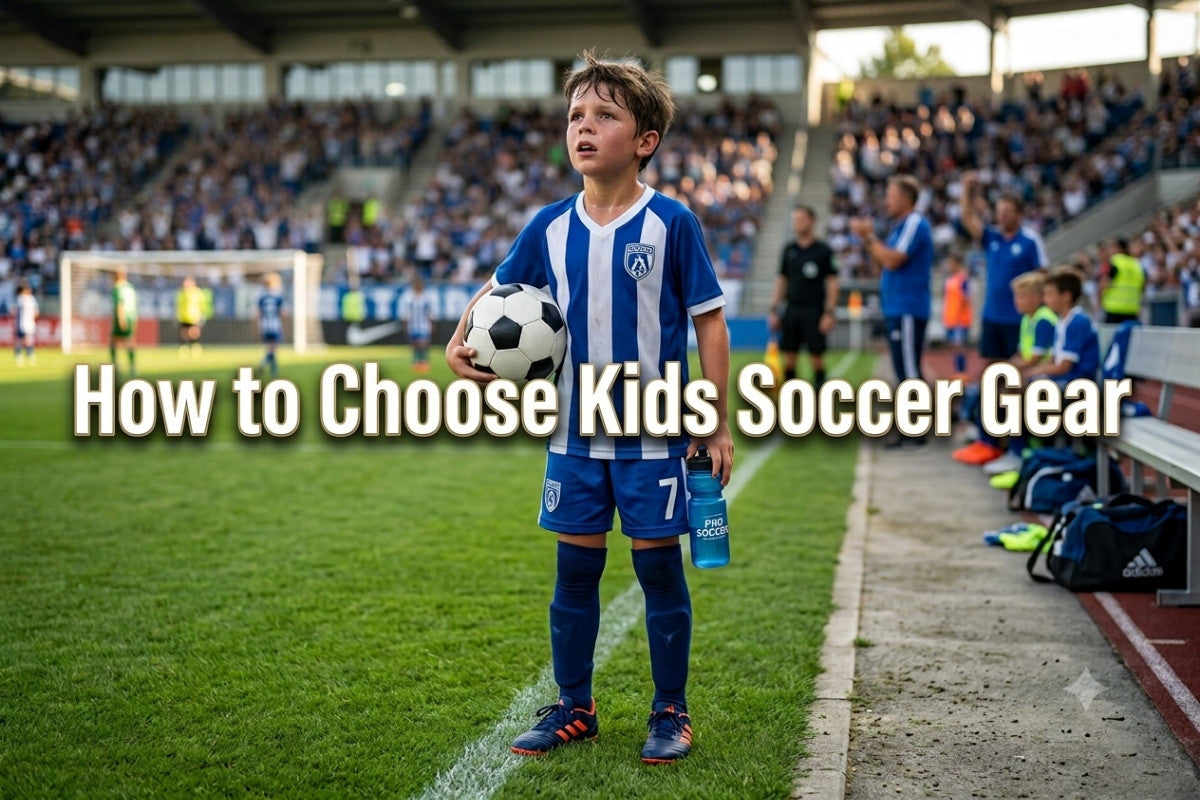
Seeing your child all excited for soccer season is one of the most fulfilling moments as a soccer parent. It's also followed by a stressful period of choosing the right youth soccer equipment. You want your young player to have the best soccer gear for kids on the market, but between rapid growth spurts and evolving league regulations, the excitement can quickly turn into dread.
There is no need to panic. Here's how to choose youth soccer cleats, jerseys, shin guards, and the appropriate ball size for your aspiring soccer player.
Soccer Cleats For Kids: Safety and Traction
Soccer cleats are the most important piece of equipment your child will wear in the whole season. Properly fitted youth soccer cleats protect growing joints, prevent painful blisters, and provide the necessary traction to change direction safely on slippery grass or synthetic turf surfaces.
 Firm Ground vs. Turf: Choosing Outsoles Based on Playing Surfaces
The correct outsole is necessary to avoid slipping and injuring the player's ankles․ Firm Ground (FG) or hard ground studs have molded plastic or rubber studs designed to dig deep into natural grass pitches․ If your child plays in indoor facilities‚ or on hard‚ synthetic turf fields‚ they should wear Turf Shoes (TF)․ TF shoes feature dozens of small rubber dimples to help balance the weight distribution on the shoe to avoid discomfort on hard surfaces․
How Should You Pick the Right Soccer Cleat Size?
While it is tempting to buy a size larger to account for growth spurts, oversized soccer shoes cause friction, severe blisters, and unstable footing. A proper soccer cleat should fit snugly, leaving no more than a thumb’s width of space between the big toe and the tip of the shoe. Ensure your child tries them on wearing thick soccer socks to get an accurate, field-ready fit.
Ready to choose? Click here to browse through our Firm Ground youth soccer cleats and Turf Shoes for young players.
Youth Soccer Apparel: Breathable Jerseys For Young Players
 Performance soccer clothing is built to help your child look like a pro and to control their body temperature through the rigors of the game․ Choose lightweight synthetic fabrics blended with polyester mesh that will wick moisture away from the skin to keep your young players cool and dry so they can concentrate on the ball․
Official Replica Jerseys vs. Durable Training Gear
For formal team play, always check your local league's color requirements and uniform rules. Outside of official match days, durable training jerseys and lightweight training shorts are essential for weekday practices.
Investing in high-quality, abrasion-resistant materials ensures their apparel can withstand frequent slides, falls, and repeated cycles through the washing machine without losing shape or tearing.
Upgrade their practice wardrobe today! Shop our collection of Youth Soccer Jerseys to find durable, moisture-wicking apparel built for daily training.
Essential Protection: Choosing Youth Shin Guards
Shin guards are legally mandated by almost all youth soccer leagues to prevent severe impact injuries to the tibia. For maximum safety, a shin guard should cover the vulnerable area from just above the ankle up to roughly two inches below the kneecap, absorbing impact without restricting a player's natural running stride.
Slip-in Guards vs. Ankle Shin Guards
Younger players and beginners benefit significantly from ankle shin guards, which feature built-in padded ankle stirrups and a secure top strap to keep the protective shell perfectly in place. Older, more experienced youth players often prefer lightweight slip-in guards, which slide directly into the soccer socks and offer greater freedom of movement and minimal bulk.
Keep your child safe on the pitch. Browse our protective Youth Shin Guards to ensure premium comfort and impact protection every game.
Soccer Ball Sizes by Age Group
Using the wrong soccer ball size can affect their skill development and even cause muscle strain. Leagues change ball sizes as children grow to match their physiological development and coordination levels.

- Size 3: Designed specifically for toddlers and young children aged 8 and under. These balls are lightweight and highly manageable for developing basic footwork.
- Size 4: This ball size is designed for the needs of youth players aged 8 to 12 years old. It's designed to help transition players toward adult-level ball control and passing mechanics.
- Size 5: This size is the standard, official regulation soccer ball size all players aged 12, teenagers, and adult professionals use during regular season.
Get ready to play! Browse through different soccer ball sizes in our store to find the perfect pick for your player's age group.
FAQs About Soccer Gear For Kids
What is a checklist of essential soccer gear that parents must buy for a child in the first youth soccer season?
The key soccer items that you need to buy for your child include: molded soccer cleats, approved shin guards, moisture-wicking soccer socks which should be long enough to cover the guards, a soccer ball (Size 3 or 4 depending on age) and a reusable water bottle.
Can kids wear regular running shoes or baseball cleats for soccer?
No. Running shoes do not have enough lateral support and traction, which can make for dangerous slips on wet grass. Baseball shoes are also banned in youth soccer because the sharp front toe stud can cause serious puncture wounds to other players in a soccer slide tackle.
How often should I buy new soccer gear for my kid?
Replace youth soccer gear immediately if your child has toe discomfort or at the start of every new seasonal year. Children grow quickly so their cleats, shin guards, and apparel often only last one full season before they need to be updated for comfort and safety.